

Heat exchanger cleaning removes suitable fouling from the parts of the exchanger identified for maintenance. The method depends on the equipment design and where the deposit is located. Tube-side cleaning, shell-side cleaning and work on a plate exchanger involve different access and should not be treated as one interchangeable service.
Heat Exchanger Cleaning
Heat exchanger cleaning removes suitable fouling from the parts included in the work. Integrity testing and recommissioning remain separate.
HomeHeat Exchanger CleaningHeat Exchanger Cleaning enquiry
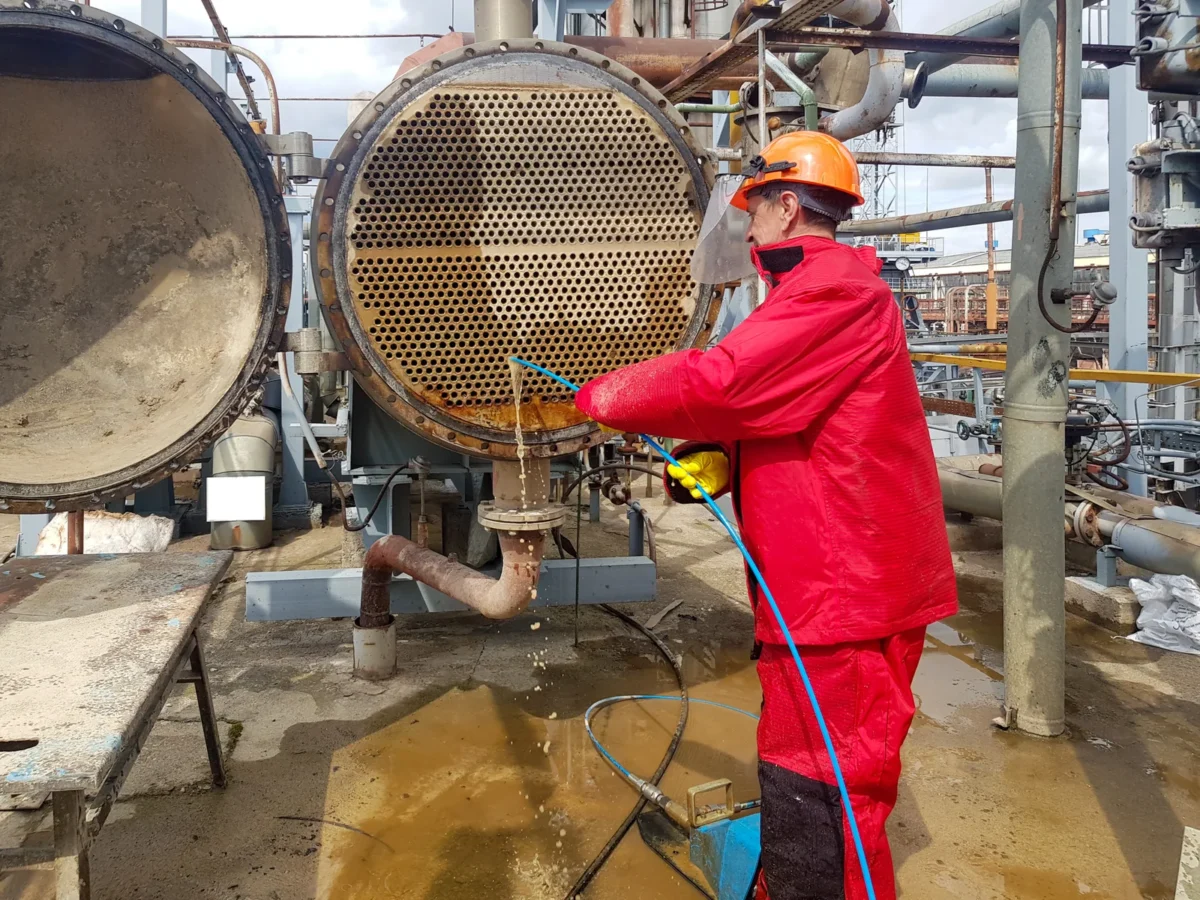
Exchanger design and access
Tube, shell and plate exchangers need cleaning methods suited to their construction and reachable surfaces.
Isolation and process condition
Residual pressure, temperature and contents are dealt with under the site's maintenance arrangements before opening.
Exchanger construction and deposit access
Tube walls, plates, seals and linings have different tolerances for cleaning contact and water pressure. Deposit composition and manufacturer guidance affect method selection. Tube-side cleaning reaches only the tube passages; it does not automatically clean headers, shell-side surfaces or every internal component.
Discuss heat exchanger cleaning
Complete the form and we will get back to you.
Isolation and access for the exchanger
The equipment is isolated, cooled and relieved of residual process pressure under the site’s maintenance arrangements. Remaining contents are identified before opening. Access and containment are established for the surfaces being cleaned, including any component removal needed to reach them, and released deposits are collected appropriately.
Cleaning results, testing and recommissioning
We identify the surfaces treated and any parts that remain inaccessible. Removing fouling can support performance recovery but does not prove integrity or guarantee original heat duty. Reassembly, leak testing, operating checks and recommissioning are separate stages where the maintenance plan requires them.
Heat Exchanger Cleaning: common questions
Is high-pressure jetting suitable for plate exchangers?
Plate design, seals and manufacturer guidance must be checked before jetting is selected.
Can cleaning address both sides of a tube exchanger?
Both sides are included only where the agreed access and method reach them.
Does cleaning guarantee original performance?
No. Mechanical condition and operating factors also affect performance.
Who prepares the exchanger for opening?
The site maintenance arrangements govern isolation, cooling and release of residual contents.
Does cleaning include leak testing?
Leak testing is a separately agreed maintenance stage.