

Industrial water jetting removes suitable process deposits from equipment and surfaces that need maintenance attention. The deposit, operating history and material beneath it are considered before treatment. Scale inside a line, residue in a vessel and a coating on steel need different access, controls and checks after cleaning.
Industrial Water Jetting
Industrial water jetting removes suitable process deposits from equipment and surfaces. Isolation and waste handling depend on the process and residues.
HomeIndustrial Water JettingIndustrial Water Jetting enquiry
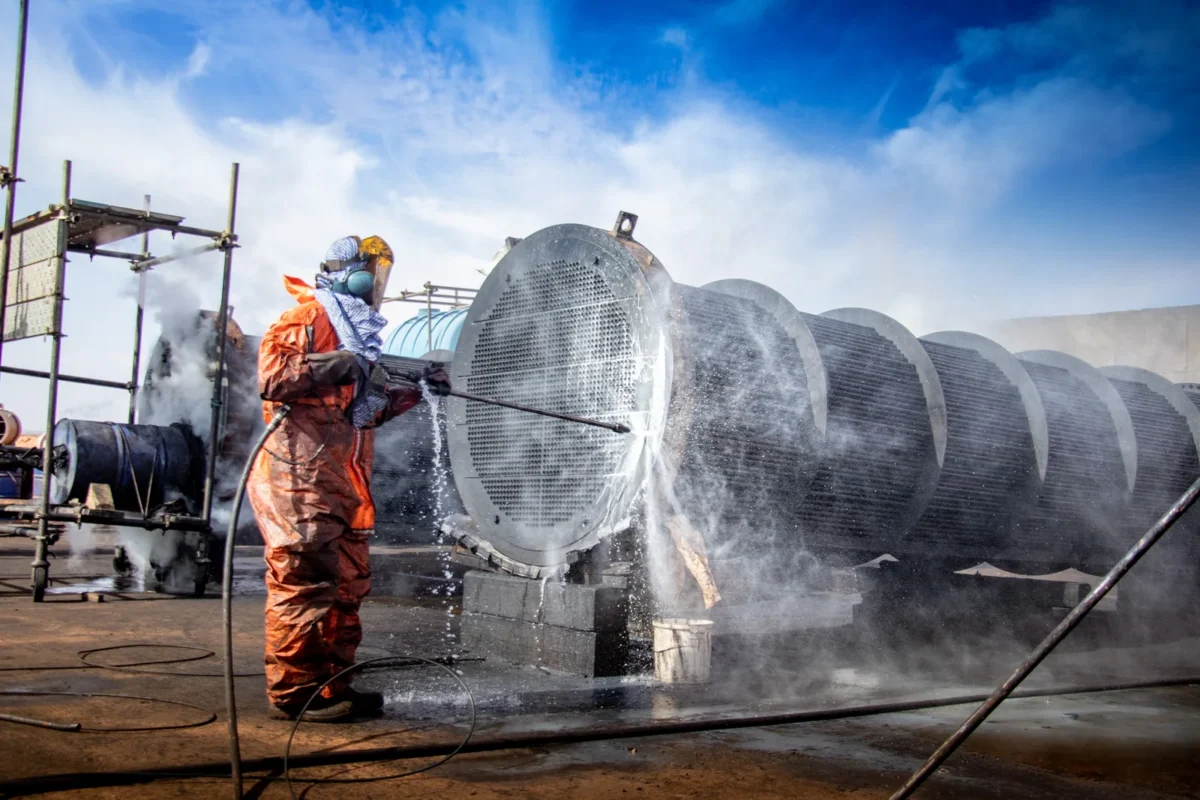
Process deposits and surfaces
Operating history, contamination and the retained material all affect the cleaning method.
Isolation and washwater
Residual pressure, temperature, contents and contaminated washwater are controlled around the cleaning work.
Process contamination and retained surfaces
Operating history helps identify what cleaning may release, including residues altered by heat or time in service. Cleaning water then carries those substances and must be handled according to its contamination. Pipe walls, linings and component condition limit the treatment that can be used. Jetting can expose a surface for maintenance but does not repair it.
Discuss industrial water jetting
Complete the form and we will get back to you.
Isolation and contaminated washwater
Connected processes are isolated as required, with residual pressure, temperature and contents dealt with under the site’s maintenance arrangements. The active work area is separated from nearby operations and waste recovery is established before jetting starts. Confined-space entry is avoided where possible and requires its own assessment, competence, controls and emergency arrangements where necessary.
Cleaning findings and maintenance decisions
We identify treated sections and areas left because of access or material limits. Removing fouling can reveal corrosion or worn components that need engineering attention. Integrity testing and restart checks are separate maintenance stages. Cleaning results support the next decision without implying that deposit removal has corrected every equipment or process problem.
Industrial Water Jetting: common questions
Can jetting be used while process equipment runs?
Live cleaning must not be assumed safe; the task needs a specifically assessed arrangement and usually isolation.
Does water alone make the waste harmless?
No. Water takes on the contamination of the material removed.
Can jetting repair worn equipment?
No. Cleaning exposes surfaces but cannot replace worn or lost material.
Does the process history affect the method?
Yes. It helps establish the residues and hazards likely to be encountered.
Can cleaning reveal corrosion?
Yes. Hidden damage may become visible after deposits are removed.