Ultra-high-pressure water jetting becomes worth considering when the removal task demands concentrated water-jet energy that a lower-pressure method cannot achieve effectively while meeting the required substrate condition. It is particularly relevant to certain tenacious deposits, coatings and controlled removal applications. However, a higher pressure rating does not automatically make cleaning faster, more selective or better suited to the material.
For industrial maintenance buyers, the decision is whether the required removal outcome justifies the more demanding method. That means assessing the deposit, the underlying asset, access, containment and acceptance standard before choosing a pressure category.
What changes when water jetting operates at ultra-high pressure?
Water jetting removes material by transferring energy through a directed water stream. Pressure contributes to the jet’s behaviour, but the result also depends on water flow, nozzle design, distance from the surface, movement across the work area and the characteristics of the deposit.
Ultra-high-pressure systems can concentrate substantial energy into a relatively small working area. This makes them relevant where adherent or hard material needs to be broken away or where water jetting is being considered instead of some mechanical removal techniques.
Pressure alone is not a complete cleaning specification. Two methods operating at different pressures may produce different results because their flow rates, tools and operating arrangements also differ.
Likewise, increasing pressure cannot overcome every limitation. If the deposit cannot be reached, the substrate is already deteriorating or the method cannot satisfy the required finish, a higher-pressure system may not solve the underlying problem.
Which removal tasks may justify ultra-high pressure?
Hard deposits on industrial equipment
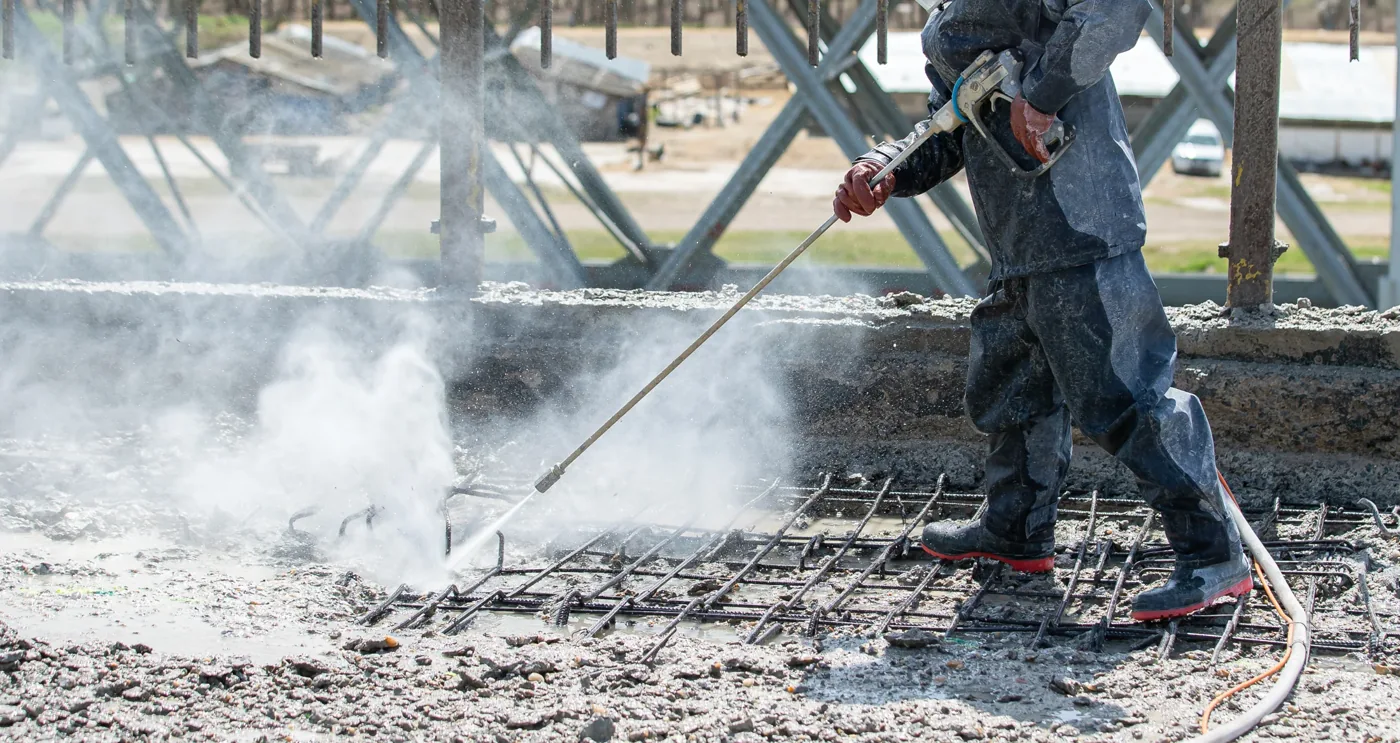
Some industrial equipment develops deposits that resist ordinary washing. Cementitious build-up is one example where the difference between loose residue and hardened material can significantly change the removal approach.
The choice of jetting equipment should reflect the removal task and the condition of the asset. Where a lower-pressure method can achieve the required result without unacceptable changes to the underlying surface, ultra-high pressure may offer no practical advantage. The reason for selecting a more demanding method should be clear before work begins.
The original process material, the thickness and attachment of the deposit, and the surfaces beneath it should be established. An unknown hard deposit should not automatically be treated as concrete or assumed compatible with a particular water-jetting method.
Coatings and corrosion products
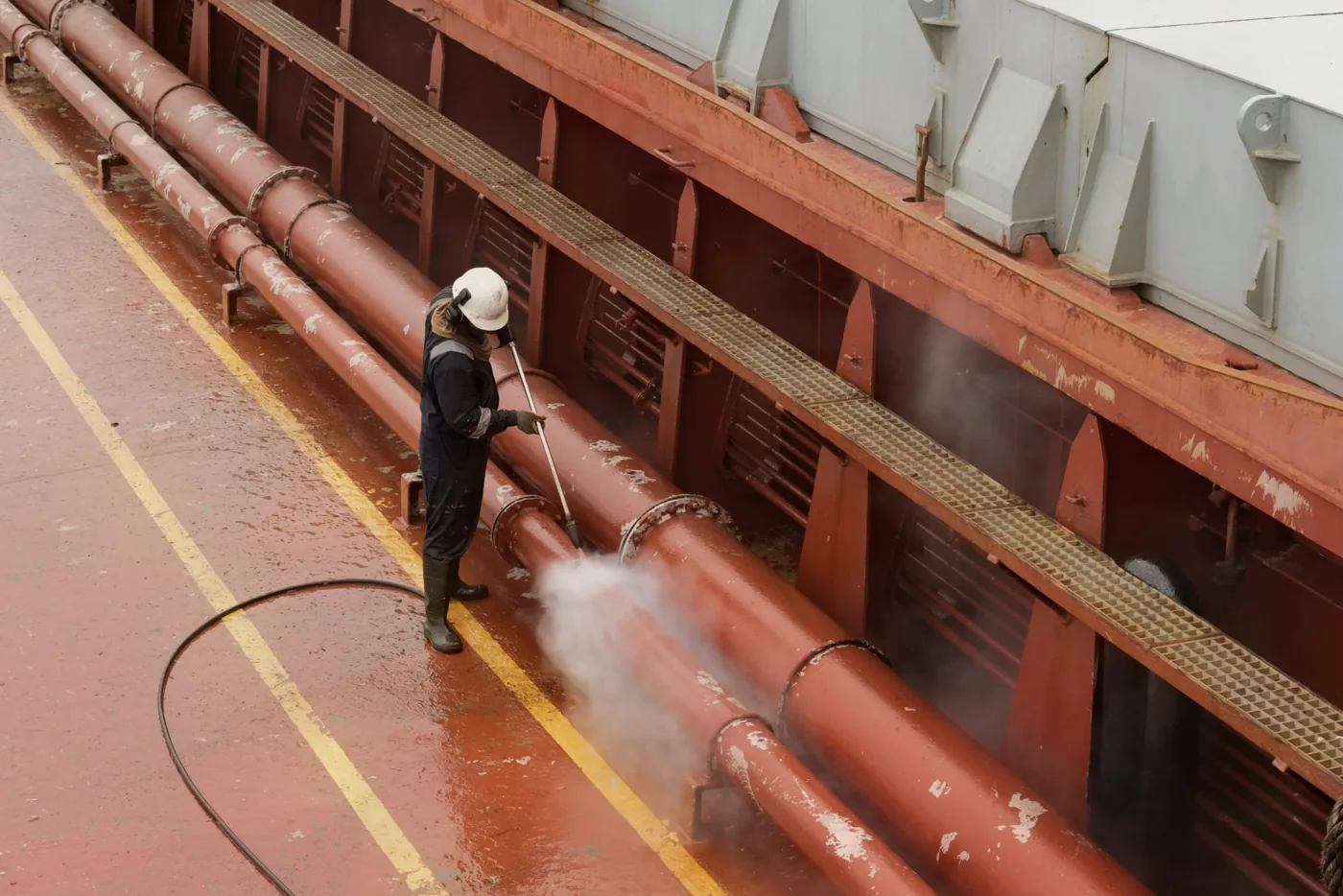
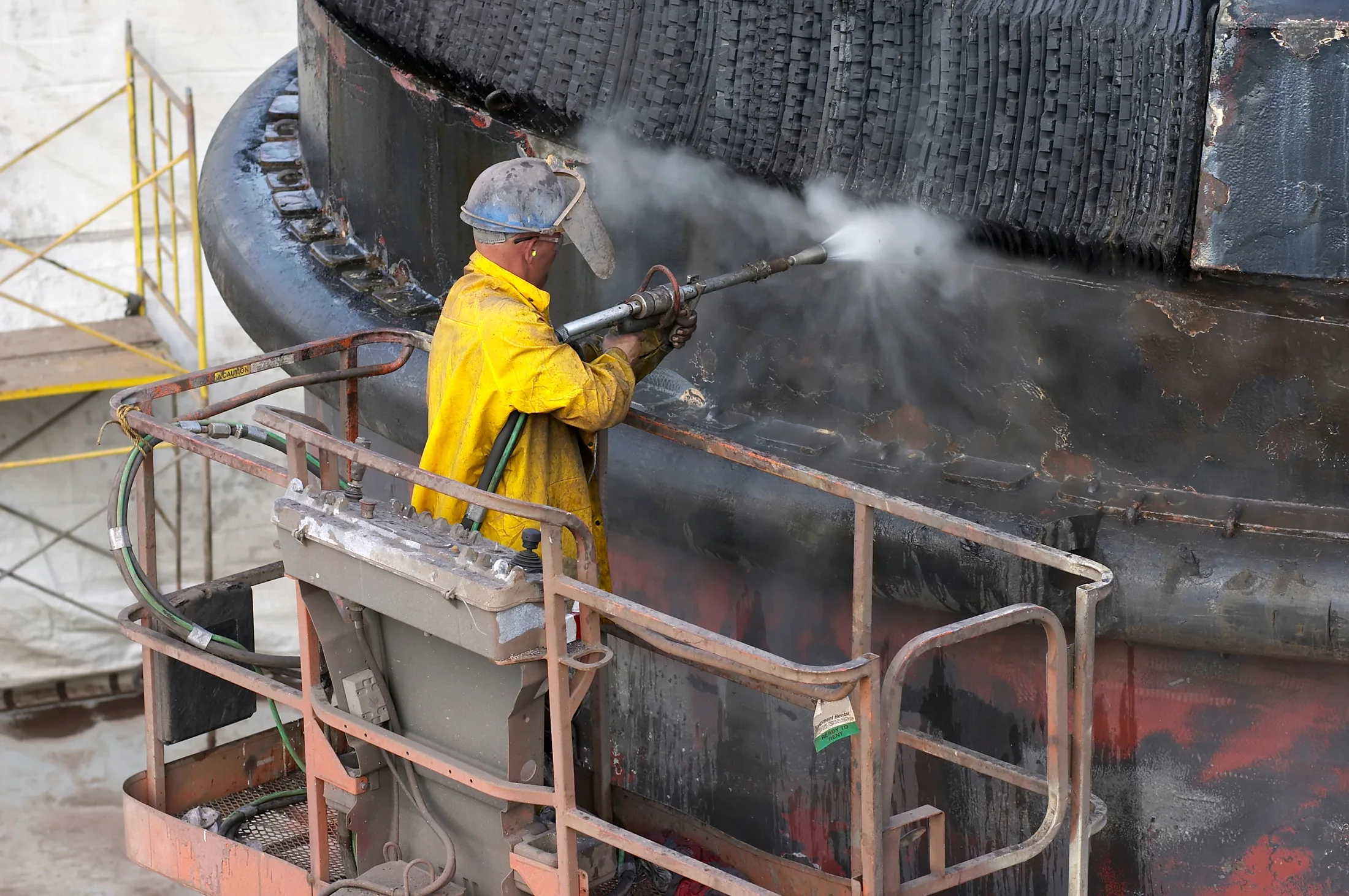
Water jetting can form part of a steel preparation process where the objective is removing specified coatings, corrosion products or adherent contamination.
The HSE’s guidance on hand-arm vibration controls in heavy steel fabrication identifies ultra-high-pressure water jetting among possible alternatives to certain mechanical surface preparation methods.
That does not establish that ultra-high pressure is always the preferred method. The existing coating, steel condition and finish required for recoating remain important. Removing a coating does not necessarily produce the surface profile required by a subsequent coating specification.
If the work involves preparing steel for recoating, consider the requirements for water jetting surface preparation, including the finish the coating specification requires. Choosing ultra-high pressure does not, by itself, guarantee that the steel will be ready for recoating.
Selective material removal
High-energy water jetting may also be considered for selective concrete removal within an engineered repair scope. However, the required depth, existing deterioration and acceptable remaining material determine suitability.
The HSE describes an application of robot-mounted water jetting for concrete bridge repair, illustrating how a water-based method can be used instead of impact tools in a suitable application.
This is a technical example, not evidence that every structure can be treated the same way. Concrete removal belongs to an engineering specification. A general industrial cleaning instruction is not enough to define the permissible removal boundary.
When is lower-pressure cleaning the better choice?
Lower-pressure water jetting may be more appropriate when the contamination is loose, relatively soft or accessible without concentrating greater energy onto the surface. The practical objective is to remove the deposit while avoiding unnecessary treatment of the substrate.
Alternatives may include conventional water jetting, mechanical cleaning, vacuum removal, dry cleaning or a combined method. Their suitability depends on the material and the required outcome, rather than on whether the method sounds more powerful.
- Loose residues: Removal may be achievable without ultra-high pressure.
- Hard adherent deposits: Higher-energy jetting may merit comparison with mechanical alternatives.
- Fragile or deteriorated substrates: Material condition may limit the available method regardless of pressure.
- Restricted access: A powerful jet is of little value if the required workface cannot be reached or inspected.
- Specified surface preparation: The acceptance criteria determine whether water jetting alone can deliver the necessary finish.
The relevant question is not whether the equipment can produce a higher pressure, but whether that capability contributes to an achievable and verifiable removal result.
How do access and remote operation influence the decision?
Access can be as significant as material hardness. Large equipment interiors, deep recesses and difficult working positions may affect which jetting arrangement can be used.
In some applications, mechanised or remotely positioned equipment can control the movement of the jet while reducing the need for personnel to work close to the removal area. This is a separate method-selection characteristic from the pressure rating itself.
A remotely operated arrangement is not necessarily ultra-high pressure, and an ultra-high-pressure system is not necessarily remotely operated. Buyers should avoid treating these terms as interchangeable.
Before comparing methods, establish the available openings, access dimensions, working reach and ability to recover loosened material. Where the work takes place inside process equipment, maintenance release and isolation boundaries also influence whether the selected system can be deployed.
What determines the scope of recovered material?
High-energy jetting changes the form of the material being removed. Deposits may break into fragments, fines or suspended particles carried by the cleaning water. This affects the proposed recovery arrangement and the volume of material requiring management.
A coating-removal task may produce a different waste stream from cementitious deposit removal. The nature of the original contamination matters independently of the pressure used.
The Environment Agency’s pollution prevention guidance explains the need to manage contaminated water from business activities appropriately. Collection, treatment and disposal arrangements therefore form part of the method comparison rather than an afterthought once removal has taken place.
What evidence should a buyer request before selecting the method?
When comparing ultra-high-pressure jetting with another removal approach, request a proposal that identifies the work and the intended result rather than relying on a maximum pressure figure.
- Deposit information: What material is present, how thick is it and how firmly is it attached?
- Asset condition: What is the substrate made from, and what condition must remain after cleaning?
- Method choice: Why is this pressure category appropriate compared with a lower-pressure or mechanical alternative?
- Access and recovery: How will the workface be reached and removed material collected?
- Acceptance: What inspection or measurement will establish that the required result has been achieved?
Where uncertainty remains, a representative method trial may help determine removal effectiveness and the effect on the substrate before a larger scope is agreed.
Ultra-high pressure is therefore best understood as a specialist method option, not a superior default. Its value is demonstrated when the particular removal task, asset condition and required finish justify using it instead of a less demanding approach.