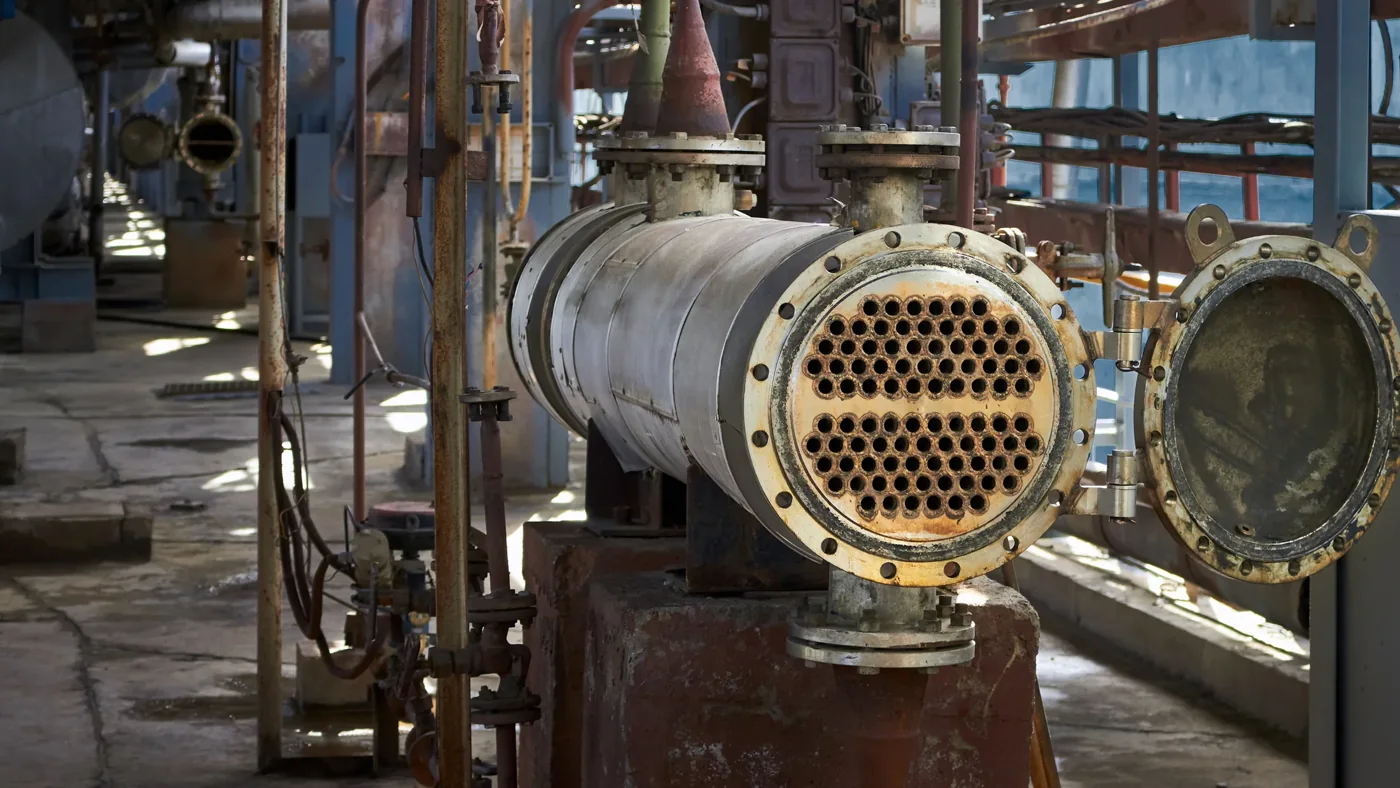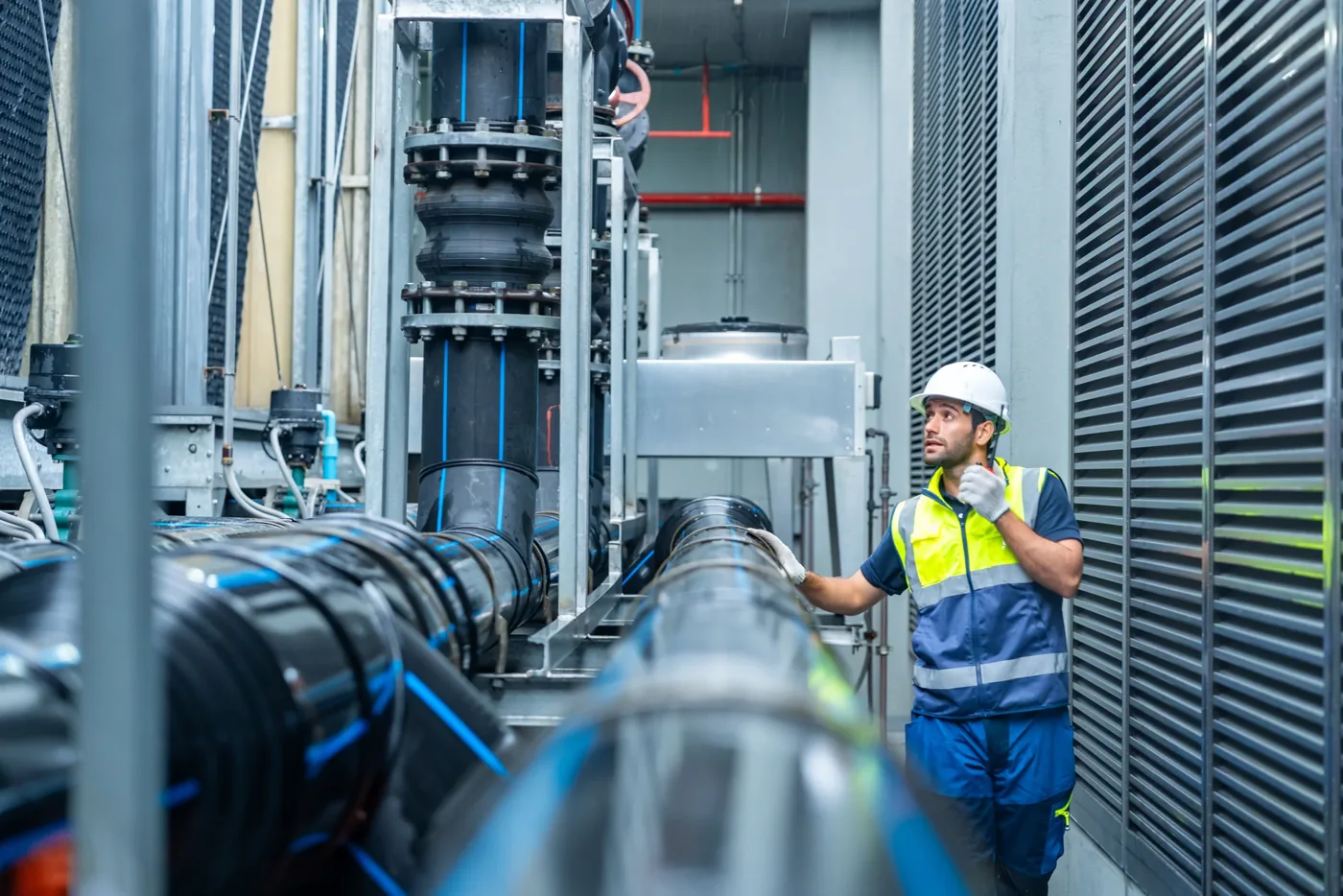
Before an industrial process pipe can be opened for internal cleaning, it must be isolated from every source capable of introducing pressure, hazardous material or other stored energy into the intended work section. This includes connected feeds, return lines, bypasses, equipment and services that may remain active while the main production line is stopped.
Closing a single process valve is not necessarily sufficient. The required isolation depends on the substances involved, operating conditions, plant design and the consequences of an isolation failure.
Start with the complete process boundary
The first question is not simply which pipe requires cleaning. It is what remains connected to that pipe when the production process is shut down.
A line may connect to several vessels, pumps, headers or recirculation circuits. Connections that appear secondary during normal production can become important when equipment is opened. An automatic valve may change position, another operating unit may feed a shared header, or a bypass may allow material to reach the supposedly isolated section.
The process review should identify:
- Upstream and downstream connections to tanks, vessels and active production equipment.
- Branch lines, bypasses, recirculation loops and shared process headers.
- Utility services, including steam, compressed air, nitrogen and cleaning-in-place systems.
- Pumps or other equipment capable of restoring flow or pressure.
- Relief, vent, drain and instrument connections affecting the work section.
- Any equipment whose operation could change conditions at the isolation boundary.
Current piping and instrumentation diagrams provide the starting point, but the actual installed arrangement must agree with the drawings. Temporary connections, modifications and unidentified branches can make an otherwise reasonable isolation plan incomplete.
Positive isolation and the limits of a closed valve
Positive isolation establishes a physical separation from a potential source of process material, commonly through an appropriately installed blank, spade or disconnected section. It is distinct from relying solely on a closed valve.
Not every process requires the same isolation arrangement. The required standard depends on the hazards and the intrusive work being undertaken. Valve-based arrangements may be appropriate in some circumstances, but their suitability cannot be assumed without a documented assessment.
The HSE’s guidance on the safe isolation of plant and equipment, HSG253, sets out principles for selecting isolation arrangements and controlling the release of hazardous substances during maintenance. Although developed principally for oil, gas, chemical and associated pipeline operations, its principles are more widely applicable to process isolation.
Isolation also requires arrangements that prevent unintended operation or reinstatement while the work is underway. The isolation plan should identify each isolation point, the required securing arrangements and how effectiveness will be verified before intrusive work. Identifying a valve on a drawing is not equivalent to establishing and verifying an effective boundary.
Stored pressure and retained process liquid
Stopping flow does not necessarily remove the contents or energy within a pipe. Liquid can remain trapped between closed valves, in low points or within connected equipment. Compressed gases, elevated sections and equipment capable of thermal expansion introduce additional considerations.
Before the section is released, the site team must account for depressurisation, venting and line draining under its authorised isolation procedure. The assessment should consider the destination and containment of retained liquid, particularly when residues are hot, corrosive, toxic, flammable or environmentally harmful.
Drainage does not automatically establish that a line is empty. Pipe gradients, dead legs, internal deposits and equipment geometry may prevent complete removal of retained material. Verification must therefore reflect the actual hazards rather than relying on an assumption that the line has drained.
Define a section that can be cleaned
Once the isolation boundaries are established, the proposed cleaning section needs a clear physical scope. This means identifying its endpoints, internal diameter, construction, accessible openings and any features that restrict the movement of cleaning equipment or loosened material.
The cleaning plan must also distinguish where water enters, where it can leave, and how displaced residues are contained. These details are particularly important on interconnected industrial sites, where an apparently separate pipe may remain connected to other operating systems.
The site operator should establish and verify the assessed isolation, record the boundary and authorise release of the defined section before industrial pipe cleaning begins. Cleaning completion is separate from subsequent integrity checks, controlled removal of isolations, reconnection and authorised return to service.
A properly defined boundary allows the work to proceed against an agreed section of plant rather than an uncertain length of interconnected pipework.