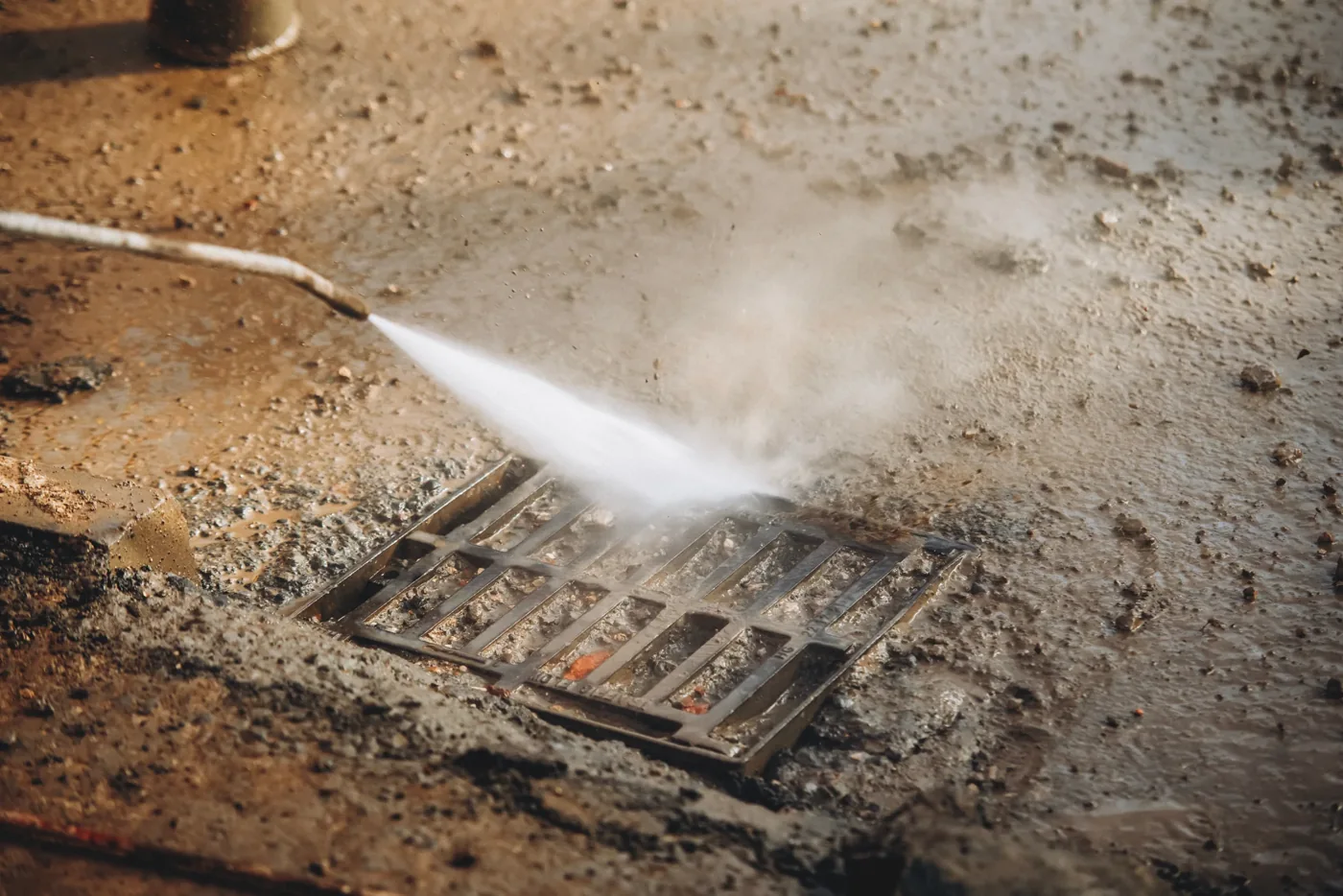
School drain jetting can take place during term time when the working area can be securely separated from pupils, staff and visitors, suitable drain access is available, and the activity does not interfere with essential school movements. Where those conditions cannot be achieved, a different working window is needed.
The deciding factor is not simply whether pupils are on site. It is whether the particular chambers, equipment positions and access routes can be managed without exposing occupied areas to the maintenance operation.
Start with the location of drain access chambers
School drainage networks often pass beneath playgrounds, entrance routes, service yards and landscaped grounds. The obstruction may be beneath one area while the most practical access chamber is somewhere entirely different.
Before scheduling work, the estates team should establish which chambers are relevant, where the jetting equipment could be positioned and whether the intended pipe section can be reached from those locations.
Three site details are particularly important:
- Chamber positions: Covers within playgrounds, pedestrian routes or vehicle areas may require those spaces to be temporarily unavailable.
- Equipment access: Jetting vehicles, hoses and associated equipment require an appropriate working position without obstructing essential access.
- Drainage connections: The affected section may connect to other buildings or facilities whose normal use must be considered.
An access point beside an unused service road may allow a different arrangement from one in the middle of a busy playground. The same maintenance task can therefore have very different implications across a school estate.
Choose segregation before choosing the time
Physical work area segregation is central to planning maintenance around occupied premises. The jetting zone must account for equipment, hose routes, opened chambers and any areas affected by the operation, rather than covering only the point where the operative stands.
The Health and Safety Executive’s maintenance guidance explains why work should be planned and communicated, with appropriate measures to protect people nearby. It also identifies barriers, safe access and using downtime as relevant considerations.
In a school, this translates into practical questions. Can pupils reach the area from another entrance? Does a fenced working zone leave enough room for ordinary movement? Could deliveries or emergency access be affected? Can staff reliably keep the area unavailable throughout the operation?
Signs alone may not provide sufficient separation where younger pupils, crowded routes or unpredictable movements are involved. The physical layout needs to support the arrangements. The HSE’s school safety guidance also identifies the need to assess vehicle movements on school premises. This is relevant where a jetting vehicle shares access with pupils, staff, deliveries or school transport.
Match work windows to the school day
Term-time maintenance can sometimes be scheduled around lessons, when outdoor circulation is reduced. However, a quiet playground does not automatically mean the whole working route is clear.
School arrival, morning breaks, lunch periods, lesson changes and collection times create different patterns of movement. Estates teams should agree the working window and affected access routes with the contractor and the school’s responsible site contact. The arrangement needs to cover equipment arrival, set-up, cleaning and reinstatement, including who will keep pupils and other site users away from the working area.
Possible arrangements include:
- During occupied hours: Suitable where the entire operation can remain securely segregated and school access is maintained.
- Before opening or after dismissal: Useful where entrances or shared circulation areas would otherwise be occupied.
- During a planned closure: More appropriate where the work requires extensive access restrictions or affects several essential routes.
For larger campuses, it may be possible to isolate one courtyard or service zone while teaching continues elsewhere. Smaller schools with a single entrance and limited circulation space may have fewer workable options.
Planning high pressure jetting for education premises therefore depends on actual site geometry and occupancy, not a single preferred appointment time.
Check conditions before reopening the area
The end of jetting does not automatically mean an access route is ready to reopen. Equipment and hoses must be removed, opened chambers secured and the affected ground left suitable for its normal use.
Where material has been brought to the surface, the area may require further cleaning before pupils return. Any remaining drainage problem should also be identified so the school knows whether normal use of affected facilities can resume.
A useful handover distinguishes what was cleaned from what remains uncertain. Restored drainage flow may be confirmed without establishing that a damaged pipe has been repaired.
The estates team can then release the area back into use once the relevant checks are complete. This prevents the school timetable from being treated as a substitute for verifying the condition of the site after maintenance.