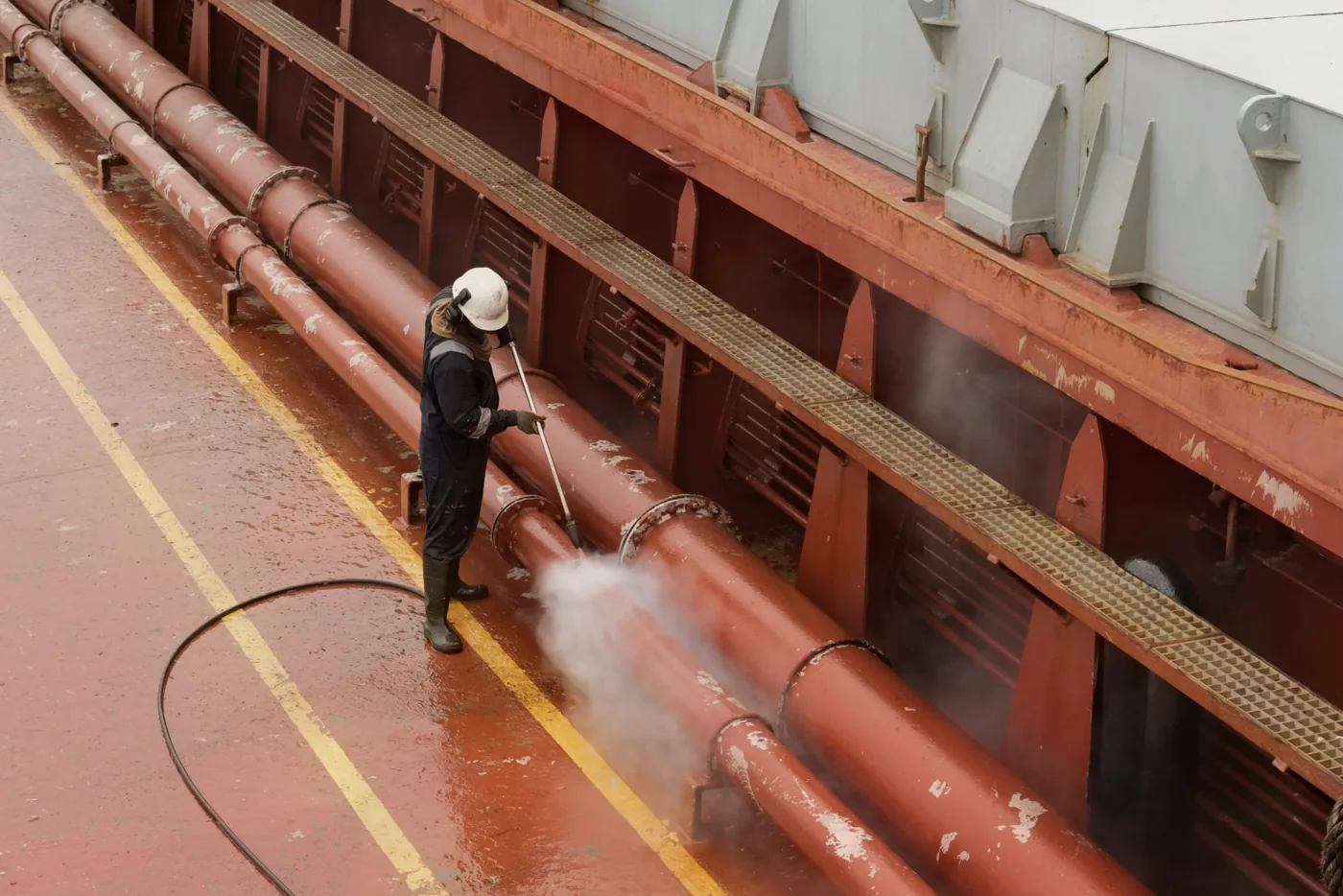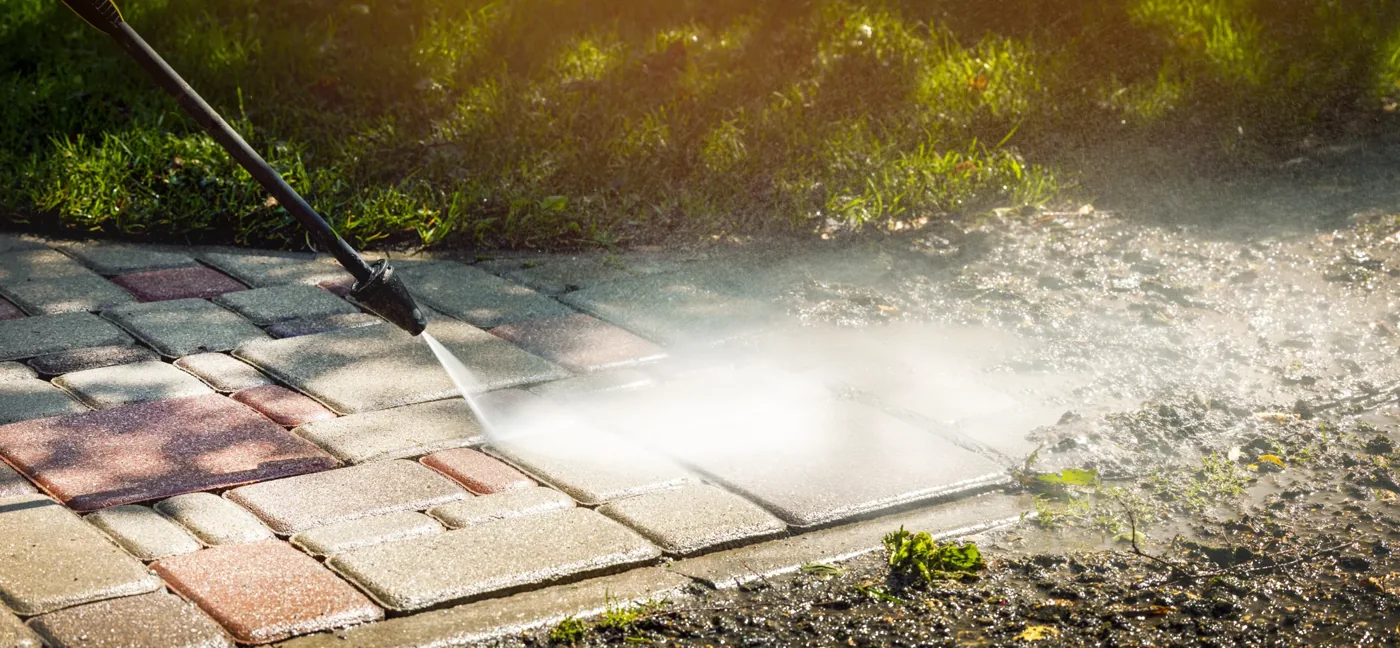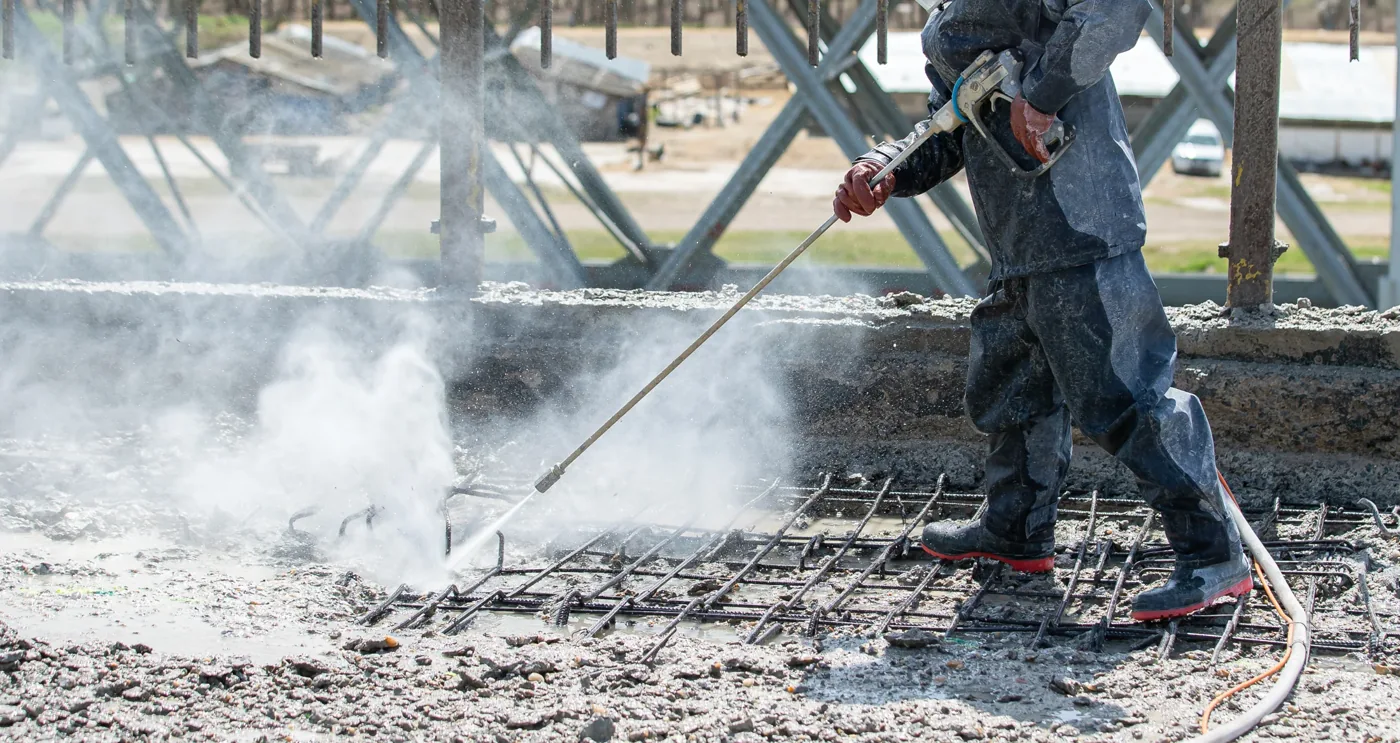
Water jetting can remove deteriorated concrete selectively while retaining much of the surrounding sound material, but it cannot guarantee that every sound area will remain untouched. Selective hydrodemolition depends on the condition of the concrete, the jetting method and the boundaries established by the repair designer.
The distinction matters when a structure requires localised repair rather than extensive demolition. The objective is to remove concrete that must be replaced, expose relevant reinforcement where required and retain a suitable substrate for the subsequent repair.
Selective removal is not simply shallow demolition
Conventional mechanical breaking transfers impact forces into concrete. Those forces may create additional cracking around the intended removal area, depending on the tools and substrate condition.
Water jetting removes concrete through concentrated hydraulic action rather than repeated mechanical impacts. It can provide useful selectivity where weakened material responds differently from adjacent stronger concrete.
The HSE describes a reinforced concrete bridge repair involving water jetting, highlighting problems associated with percussive methods, including possible reinforcement damage and cracking of the remaining concrete.
However, selectivity should not be confused with an automatic ability to identify and preserve all structurally sound concrete. Sound material can still be removed where the specified depth, jetting conditions or local substrate characteristics require it.
Where deteriorated and sound concrete meet
The boundary between defective and acceptable concrete is not always a neat line visible on the surface. Delamination, cracking, contamination and deterioration around reinforcement may extend beyond the initial area of obvious damage.
For example, the surface may appear comparatively intact while the concrete surrounding reinforcement has deteriorated. Conversely, a visibly weathered surface does not necessarily mean the full section requires replacement.
These differences influence how the removal area is defined. An engineering assessment may establish a minimum removal depth, additional treatment around reinforcement or a wider repair zone where defects extend beyond the surface.
Useful information for defining the work includes:
- The extent and depth of known deterioration, supported by the available inspection findings.
- The location, size and cover depth of embedded reinforcement.
- Areas where reinforcement exposure is required for inspection or repair.
- Concrete that must remain to preserve the structure’s intended behaviour.
- The final surface condition required for the selected repair system.
Reinforcement exposure deserves particular attention. Water jetting may clear concrete around steel bars without relying on direct breaker impacts, but this does not establish that the reinforcement is undamaged or suitable for reuse. Corrosion, section loss and repair requirements need separate assessment.
Removal depth and repair boundaries
Some projects require removal to a defined nominal depth. Others depend on reaching a suitable substrate condition or exposing reinforcement within the designer’s specified limits. These are different instructions and can produce different removal profiles.
For a localised repair, the drawing or work specification should identify where the removal starts and stops, the intended depth or acceptance condition, and the treatment required at the edges of the repair. The specification should also explain how unexpected deeper deterioration is to be handled.
A uniform depth is not always a reliable measure of satisfactory removal. If deterioration continues beneath that level, the substrate may remain unsuitable for the proposed repair. Equally, unrestricted removal beyond the agreed boundary can unnecessarily reduce the remaining concrete section.
What happens after concrete has been removed?
The exposed surface requires assessment before repair materials are placed. Remaining weak material, debris, slurry and the condition of exposed reinforcement all affect whether the area is ready for the next stage.
The HSE notes that conventional scabbling and grinding can generate substantial respirable crystalline silica dust and identifies high-pressure water jetting as an alternative to consider. Wet removal still requires management of water, debris and slurry; reducing airborne dust does not eliminate the need to manage the removed material.
The concrete removal water jetting service concerns removal within an agreed scope. The broader hydrodemolition contractors page provides context for designer-led removal work.
For the buyer, the central question is whether the proposed method can meet the required removal boundaries and leave material suitable for the specified repair. That is more meaningful than an unconditional promise that sound concrete will never be affected.